AI-Powered Vehicles: The Future of Road Safety Tech
How Technology Is Making Future Mobility Safer
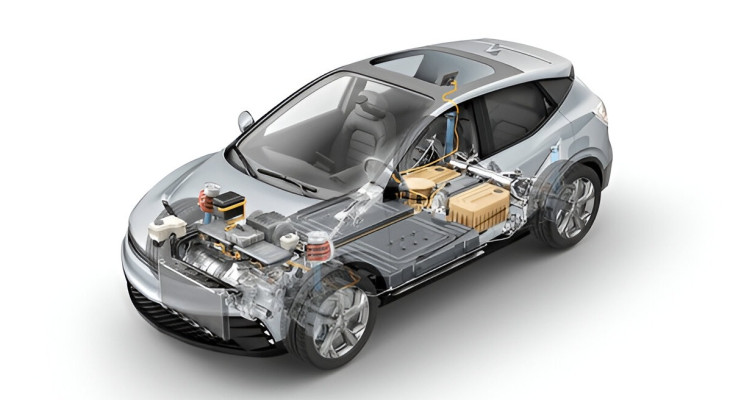
Mobility ecosystems are evolving rapidly as traffic density, urban expansion, and logistics demands place increasing pressure on transportation networks. Safety remains one of the most urgent challenges in this environment. According to the Road Accidents in India 2023 report by the Ministry of Road Transport and Highways, the country recorded more than 4.8 lakh road accidents and over 1.72 lakh fatalities in 2023. These figures highlight the pressing need for systems that can reduce human error and enable quicker, more reliable responses to road risks.The automotive industry is now tackling these challenges through a new wave of technologies that combine artificial intelligence, advanced sensing, connectivity, and software-driven vehicle architectures. Together, these innovations are transforming vehicles from mere mechanical machines into intelligent systems capable of identifying hazards, assisting drivers, and preventing accidents.Artificial Intelligence & Predictive SafetyArtificial intelligence plays a central role in modern vehicle safety systems. AI platforms analyse sensor data in real time to detect potential hazards and support rapid decision-making on the road.Using inputs from cameras and radar sensors, AI models identify surrounding vehicles, pedestrians, road markings, and traffic conditions. This continuous analysis allows the system to detect risks such as sudden braking, lane deviations, or unexpected obstacles. When a potential collision is identified, the system can alert the driver or activate braking assistance.One of the key advantages of AI-driven safety systems is speed. Human reaction times during emergencies can take a second or more, whereas AI perception systems interpret road conditions within milliseconds. This faster response enables earlier intervention, which can significantly reduce the likelihood or severity of certain types of accidents.Advanced Driver Assistance SystemsAdvanced Driver Assistance Systems (ADAS) are now becoming standard features across many vehicle segments. These technologies help drivers during critical driving situations and aid in maintaining safe vehicle behaviour on the road.Features such as adaptive cruise control, forward collision warning, and lane-keeping support help maintain safe distances between vehicles and reduce abrupt manoeuvres. By continuously monitoring the driving environment, ADAS enhances situational awareness and provides corrective support when necessary.Rather than replacing the driver, these systems act as an intelligent layer of support that helps minimise the impact of momentary lapses in attention.Sensor Fusion, Environmental Awareness and Night-Time PerceptionReliable vehicle safety systems depend on a precise understanding of the surrounding environment. Modern vehicles achieve this through sensor fusion, where data from multiple sensors is combined to create a unified and accurate view of road conditions. Cameras capture visual cues such as lane markings, pedestrians, and traffic signals, while radar measures the distance and speed of surrounding vehicles. This layered sensing approach ensures reliable detection even when visibility is affected by fog, rain, or glare.Advances in artificial intelligence are further strengthening this capability through AI-driven night-vision enhancement. Deep learning models trained on large volumes of real-world vehicle camera data improve brightness, suppress noise, and restore important scene details in low-light environments. This enables advanced driver assistance systems to detect pedestrians, vehicles, and road infrastructure more accurately during nighttime driving. Designed as scalable Software-as-a-Product solutions, AI-powered perception systems can be deployed across different vehicle platforms and continuously improve with additional driving data, strengthening safety in low-visibility conditions.Connected Mobility & Traffic IntelligenceConnectivity is expanding the role of technology beyond the individual vehicle. Connected mobility platforms enable vehicles to exchange information with traffic systems, digital infrastructure, and cloud-based mobility networks.Through these systems, vehicles receive real-time updates about road hazards, congestion, and incidents ahead. Access to such information allows drivers to adjust speed, change routes, or take precautionary measures before encountering dangerous conditions.On a broader level, connected traffic management platforms help cities improve traffic flow by analysing congestion patterns and optimising signal coordination. Smoother traffic movement reduces sudden braking and erratic lane changes, both of which are common causes of accidents in urban areas.Software-Defined Vehicle PlatformsA major shift in automotive engineering is the emergence of software-defined vehicles. Traditionally, vehicle functionality remained largely fixed after manufacturing because software systems were tightly integrated with hardware components.Modern vehicle platforms are increasingly designed so that software can evolve independently. This allows over-the-air updates that enable manufacturers to enhance safety systems, improve driving algorithms, and introduce new capabilities throughout a vehicle’s lifecycle.Continuous software upgrades ensure that safety systems can benefit from new data insights and technological advancements without requiring major hardware changes.Centralised Vehicle ComputingSupporting this transition is a new generation of vehicle electronic architectures based on centralised computing. Earlier vehicles relied on numerous independent electronic control units, each responsible for a specific function.New architectures consolidate processing power into central computing platforms that manage multiple vehicle systems simultaneously. This structure enhances communication between safety technologies such as sensors, perception systems, and driver assistance platforms.By reducing system complexity and enabling faster data processing, centralised computing allows vehicles to detect and respond to potential hazards more efficiently.Monitoring Driver BehaviourWhile vehicle technology advances rapidly, human factors remain a major contributor to road accidents. Driver monitoring systems are designed to address this challenge by analysing driver attentiveness during journeys.Using cameras and AI-based computer vision, these systems track indicators such as eye movement, head position, and facial orientation. If signs of distraction or fatigue are detected, the system alerts the driver and encourages corrective action.Fatigue remains a significant safety risk, particularly during long-distance travel. Early detection of reduced alertness can help prevent accidents caused by delayed reactions or loss of concentration.Toward Safer Mobility SystemsFuture mobility will be shaped by the convergence of intelligent technologies. Artificial intelligence, advanced sensing systems, connected infrastructure, and software-defined vehicle platforms are redefining how vehicles operate and interact with their surroundings.These technologies enable vehicles to anticipate risks, assist drivers in real time, and respond more swiftly to hazardous situations. As adoption expands and transportation infrastructure becomes increasingly connected, the impact on road safety could be substantial.The transformation of vehicles into intelligent digital platforms marks a fundamental shift in transportation. By combining data, connectivity, and advanced computing, the next generation of mobility solutions is building a safer and more resilient transportation ecosystem.Disclaimer: The views expressed in this article are those of the author and do not necessarily reflect the views of the publication.
India's 4.8 lakh road accidents in 2023 highlight urgent safety needs that technology can address. AI, advanced sensors, and connected systems are transforming vehicles into intelligent platforms that detect hazards faster than human reaction times. Software-defined architectures enable continuous safety improvements through over-the-air updates and real-time driver monitoring.
Original Article
Read full article on sourceExplore More
Related News

Charlie Health Names New Chief Technology Officer to Accelerate Technology and AI Strategy
PR Newswire: press release distribution, targeting, monitoring and marketing · 2026.04.03

Rackspace Technology's Strategic Pivot Earns Industry Recognition
NEWS & AKTIENKURSE | AD HOC NEWS · 2026.04.02

JAPAN-CLIMATE-ENERGY-TECHNOLOGY-ENVIRONMENT • Channels Television
Channels Television · 2026.04.05
Mustard Debate: Tradition vs Technology
Devdiscourse · 2026.04.05

read, write and learn about any technology
HackerNoon · 2026.04.05

Technology and the New Logic of Growth
Daily Good Morning Kashmir · 2026.04.05